02 Apr What is an Obituary Advertisement
Table of Contents
- What Is an Obituary Advertisement?
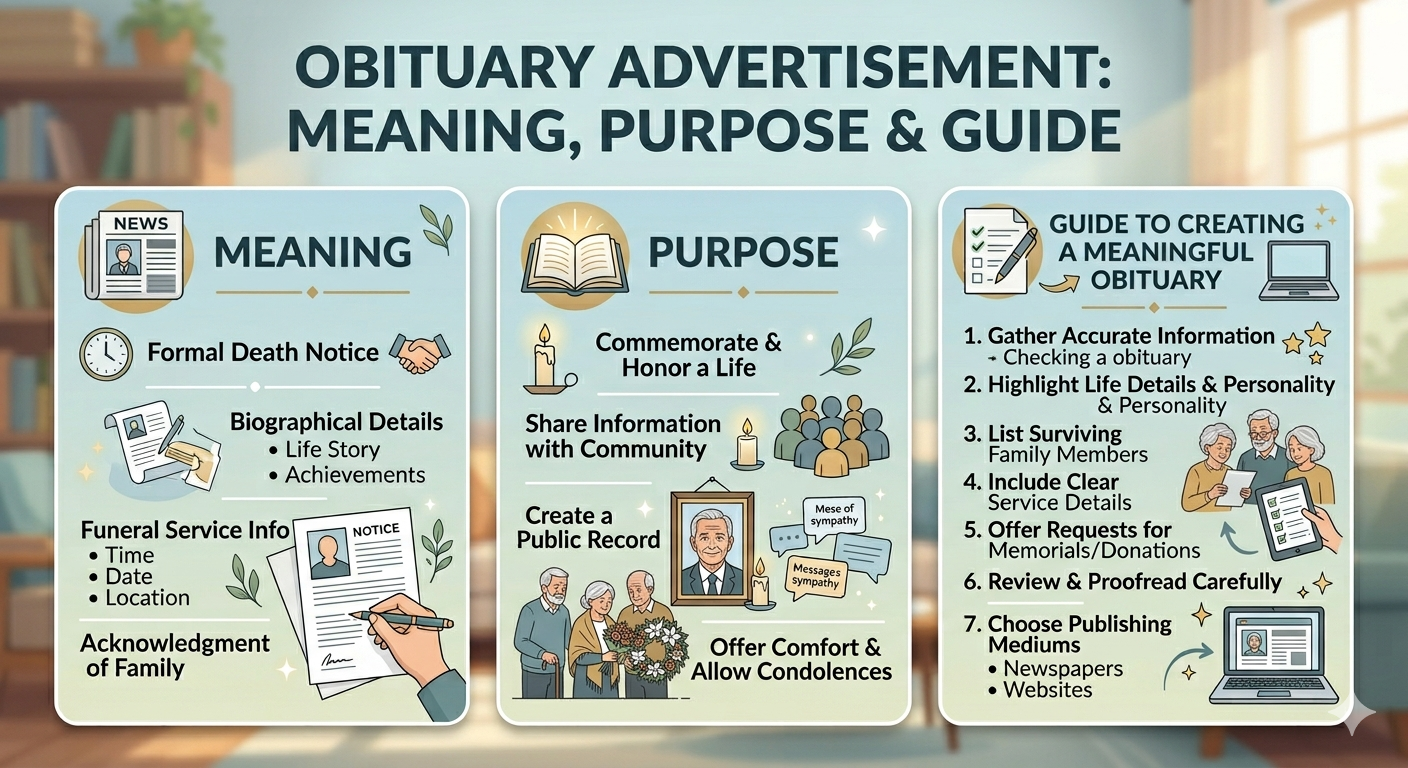
- Definition and Purpose of an Obituary Advertisement
- History of Obituary Advertisements in India
- Formats of Obituary Advertisements
- Difference Between Obituary & Death Notice
- Emotional and Legal Aspects
- How to Put an Obituary in Times of India
- Frequently Asked Questions
What Is an Obituary Advertisement? Complete Explanation
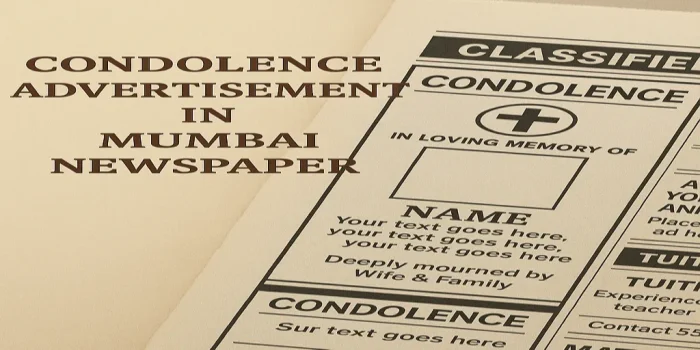
An obituary ad is an announcement placed in a newspaper or other publications, paid for by the family, announcing the passing of an individual and providing information about their life, family, and funeral service. It's placed by the family. It's not a free copy, it's a paid classified and/or display advertisement just like any other.
I'd like to point out to some people that an obituary advertisement is not the same as a death notice. A eulogy to your loved one isn't published automatically by the newspaper. For an obituary ad to appear in a newspaper, someone has to write it, place it and pay for it. That distinction matters.
Definition and Purpose of an Obituary Advertisement
At its simplest, an obituary advertisement does three things: It announces to the public who has died. It provides some information about the deceased. And it asks participants to attend a funeral or other gathering.
Beyond that, families do things differently with the obituary ads. Some are short - name, dates, line from family. Some are long, with descriptions of her career, who is still living and a picture. Neither is more correct than the other.
Their function has always been to notify. Before the cell phone, before WhatsApp, before computers - if you wanted to let people know in a newspaper, you ran an obituary ad. That function hasn't disappeared. It's shifted. Families still often run an ad even if they've shared news online because older members of the community and family still read newspapers.
In India, newspaper obituary ads have an extra function. A caste group, a trade group, a religious group - many of these groups require a notice in a local or national newspaper. This ad is a declaration. It's a public acknowledgment.
History of Obituary Advertisements in Indian Newspapers
The practice of newspaper obituaries in India goes back far. The early English language newspapers, such as Times of India, The Hindu, Statesman, published death notices from colonial times, mainly for British and elite Indian families. They were brief: name, date, occasionally an address for visitors.
Over the middle decades of the 20th century, obituary advertisements became more elaborate. Through the 1980s and 1990s, running classified ads with photos became the norm in major city newspapers. Families began to use the space in different ways - longer eulogies, more intimate language, lists of achievements.
Obituaries also developed in regional language papers. In Kerala, Malayalam newspapers such as Mathrubhumi and Malayala Manorama have long obituary sections. In Tamil Nadu, Dinamalar and Dinakaran run notices that can take up large amounts of space. They're not obituaries translated from an English format, but their own genre.
One thing that has not changed: in most of India, newspaper obituaries are paid for by families. The newspaper doesn't write them for you.
Formats of Obituary Advertisements
Classified Text Ad
The cheapest format. Plain text, no image, charged per word or per line. Works for a simple death announcement.
Example: Passed Away Shrimati Kamala Devi Sharma 12 March 1939 – 28 September 2025 Wife of the late Rameshwar Prasad Sharma. Mother, grandmother, and great-grandmother. Prayer meeting: 5 October, 4 PM, Sector 15 Community Hall, Noida. — Sons, daughters-in-law, and grandchildren
That's roughly 40 words. At TOI Delhi rates, that's a modest spend.
Display Classified Ad (With Photo)
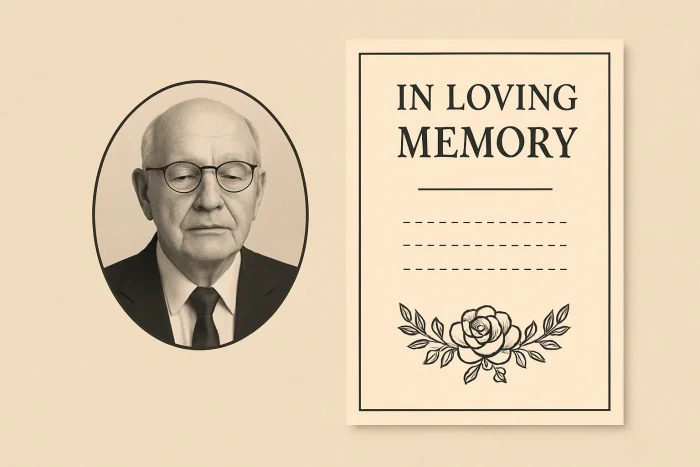
A fixed-size box. The photo is on one side and the text is on the other. Popular for people in the community, or when families want something fancier.
The photo is usually a portrait. Some families want a recent image, but often families want a younger photo. Both are fine. What is not ok is a low DPI photo - it will be blurry. Minimum 300 DPI, JPEG format.
Full Display Ad
Large, sometimes with a background design, larger photo, full tribute. These can be costly, depending on size and location. I have seen families spend at least ₹40,000-₹80,000 on a full page or half page tribute for a highly famous person. Most families do not need more than a display classified.
Differences Between Obituary Ads and Death Notices
A death notice is minimal. Name, dates, maybe the funeral details. Short. Often text-only. Its only job is to inform.
An obituary advertisement is more. It's a tribute. It includes something about the person's life — their profession, their character, their family, their contributions. It's the difference between a public record and a public memory.
There's also a third type — the remembrance ad or in memoriam notice — placed on anniversaries after the death.
Emotional and Legal Aspects of Obituary Advertisements
The Emotional Side
Writing an obituary ad is hard. People are mourning and trying to condense a lifetime into words while managing responsibilities.
The Legal Side
For most obituary advertisements in newspapers, there are no legal requirements. No death certificate or affidavit is required.
However, in certain legal situations like property or insurance, the ad may be used as supporting documentation.
How to Put an Obituary in Times of India
- Go to the TOI booking portal
- Select city edition
- Choose obituary category
- Enter ad content
- Select date
- Make payment
- Receive confirmation
For text ads: 10–15 minutes booking time.
For display ads: allow more time for design and photo upload.
Book at least 2–3 days in advance. Weekend slots fill faster.
Frequently Asked Questions – TOI Obituary Ads
-
What is an obituary advertisement in the newspaper Times of India — explained simply?
It's a paid notice placed by a family to announce a death and share information about the deceased. Obituary advertisement in TOI appears in the classified section under Obituary, Demise, or In Memoriam. You write the content, pay the applicable rate, and it publishes on your chosen date. TOI doesn't write it for you — that's the family's job. -
What are obituary advertisement examples for Times of India?
Two common ones. First: classified text — plain words, name, dates, family line, prayer meeting details. Second: display classified obituary ad example — a boxed design with a photo, larger text for the name, and a short tribute. Display ads look more formal. Text ads are faster to book and cheaper. Most families in Mumbai and Delhi use the display format for known community figures, text for quieter notices. -
How to put an obituary in Times of India step by step?
Portal → select city → choose Obituary category → write or upload ad → pick date → pay → confirm. Booking an obituary in Times of India takes under 15 minutes for text ads. Display ads take longer if you're submitting a custom design. Submit at least 2 days before your target publication date. Don't call the day before and expect guaranteed placement. -
What is the difference between an obituary ad and a remembrance ad?
Obituaries are placed when a person dies - they're announcements. Remembrance ad vs obituary ad: remembrance ads are placed on the anniversary, sometimes years on. They're not announcing a death. They're marking a date. Different purpose, same booking process. They're posted in the same categories so you're not alone. Check with the booking office if you're unsure of the category. -
What are the legal requirements for an obituary ad in Times of India newspaper India?
There are none for personal tribute ads. The legal requirements for newspaper obituary in India are relevant only if the newspaper is part of a legal proceeding - will, property, insurance, trust, etc. In these situations, ad is not the document itself. All the newspaper requires is your ad copy and to pay them. No death certificate, no affidavit. -
How to design obituary advertisement examples for newspapers?
Keep the photo clear and high-resolution. Use a simple layout — name prominent, dates below, photo to one side. Avoid cluttered designs with too many fonts or borders. Designing a newspaper obituary advertisement works best when it's clean. One font family, two sizes maximum. If using an agency, ask to see a proof before final submission. Design errors in print can't be corrected after publication. -
What documents are needed for an obituary advertisement in a newspaper?
For a standard notice: none. Write your content, pay, publish. Documents needed for newspaper obituary ads are only relevant in unusual situations — some newspapers may ask for verification if the notice involves a public figure and they're unsure of accuracy. Practically speaking, for a family booking a personal tribute, you won't be asked for anything beyond payment. -
What is an obituary ad vs death notice in Times of India?
A death notice is a short announcement — name, date, maybe funeral details. An obituary ad vs death notice in TOI comes down to length and content. The obituary is a tribute. The death notice is a record. Both can be booked through the same category. The newspaper doesn't enforce a formal distinction — it depends entirely on how much content you submit and what size ad you pay for. -
How to write obituary advertisement content effectively?
Start with the facts. Name. When they were born and died. Survivors. Then a line or two of description. Keep it honest. Don't go with something like "everyone will miss them" - be more specific: what did they do, how did they live, what did they mean to others? The key to writing good obituary advertisement copy is to be specific. Specificity is key - short is best. -
What fonts work best for obituary advertisement examples?
Obituaries are usually typeset in serif fonts like Times New Roman, Georgia, Garamond. They're easier to read in small sizes. Top fonts for designing newspaper obituary ads in India: printable fonts. Script fonts are ugly and unreadable at small sizes in newsprint. If you're providing a designed file, use common, printable fonts and embed them in the PDF. Have your agency do this.

 admin19 February, 2025
 admin20 February, 2025
- admin21 February, 2025
- admin22 February, 2025