16 May Step-by-Step Guide: How to Book a Times of India Obituary Ad Today
Table of Contents
Choosing the Times of India for a remembrance notice is a decision many families make when they aren't fully prepared for the process. It is difficult to write and publish a death notice within a 24-48 hour timeframe, particularly when dealing with the immediate effects of a loss.
This guide serves as your essential manual for navigating the TOI advertising Obituary Ad. We break down the three primary ways to book an ad, providing a clear timeline of what needs to be done and when. Additionally, we explain how this public notice functions as a vital legal document for future administrative needs.
If you are still comparing newspapers: Please refer to our General Guide to Funeral Ads in India, which covers publications nationwide.
If you have already chosen TOI: This guide is specifically designed to help you complete your booking right now.
The Times Tribute Ecosystem: More Than a Classified Advertisement
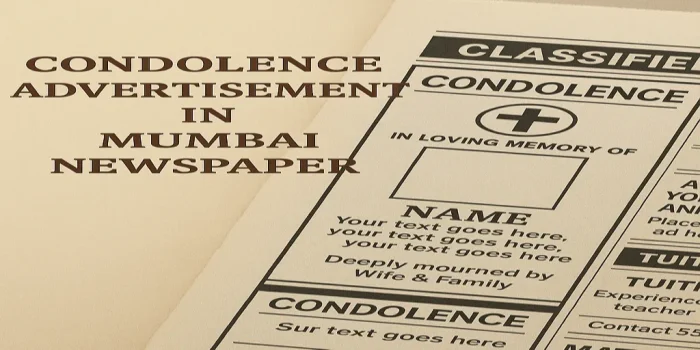
Most people would consider a TOI obituary ad to be a tiny line in the paper. They believe that it is sandwiched between other public announcements. The truth is, however, that this isn't the case.
Times Group has a times digital site called Times Tribute. It serves as a lasting memorial to be accessed online. A display ad that gets placed in the newspaper is frequently placed on this website as well. This will result in the creation of two records:
- The print record: This is a physical notice in the paper. You can clip it and keep it. It has legal and official weight.
- The digital record: This is a searchable listing online. It stays there forever. Family and friends can leave messages of love. You can also share the link on WhatsApp.
This dual system is very helpful for families. Older family members can read the print notice. It is available online for younger members of the family.
Digital editions are also available from the Times Tribute website. These cost less. A good option if you've already run a print ad and want it available online for searching.
TOI Obituary Ad Booking: Which Route Is Right for You?
When time is short and emotions are high, choosing the most efficient booking method is essential. There are three primary ways to place an ad in The Times of India, each suited to different needs and levels of technical comfort. The Times of India has 3 ways for obituary notifications: They all serve a different purpose.
- 1. The Direct Online Route (Self-Service)
Best for: Those who want full control and immediate confirmation.
How it works: You visit the official TOI ad portal, select the "Obituary" category, and choose your city edition. You can type your text, upload a photo, and use built-in templates to see a live preview.
Payment: Instant via UPI, Credit/Debit cards, or Net Banking.
The Advantage: It's available 24/7, allowing you to book even late at night for the following days. - 2. The Authorized Ad Agency Route
Best for: Families who want professional design and help with documentation.
How it works: You contact an accredited agency (like releaseMyAd or similar partners). You send them the text and photo via WhatsApp or email, and they handle the formatting, document verification, and scheduling.
Payment: Usually handled via bank transfer or online links.
The Advantage: Agencies often have "bulk" relationships with TOI, which can sometimes lead to better placement or discounted rates for multi-city releases. - 3. The Physical TOI Counter Route
Best for: Those who prefer face-to-face interaction or have cash-only payments.
How it works: You visit a local Times of India office or a designated booking counter. A staff member will help you fill out the form and scan your documents.
Payment: Cash, Cheque, or Card.
The Advantage: You get a physical receipt immediately, and you can clarify any doubts regarding the ad’s appearance with a representative.
Step-by-Step: How to Publish an Obituary in the Times of India
Whether you use an online portal or an agency, the procedure remains the same. Follow these steps to ensure your notice is published correctly:
- Step 1: Select the Right Category
The Times of India uses specific headings to organize the obituary section. Choosing the correct header helps readers quickly find your notice and understand its purpose.
This could cause confusion if you select the wrong header. A "Chautha" invite under "Sad Demise" is similar to a new death notice, for instance. Firstly, always check this.Category Header Use It When... Sad Demise Use for a death notice within 1–3 days. Tributes Use to celebrate the person's life story. In Memoriam Use for an anniversary or a special date. Condolence Use if you are an office or a third party. Chautha / Bhog Use to invite people to a religious ceremony. - Step 2: Choose Your City Edition
The Times of India has over 30 editions nationwide. Your ad will only appear in the specific cities you pay for. To avoid missing key audiences, consider:- Work History: Where did the deceased spend their career?
- Family Roots: Where does the extended family reside?
- Business Ties: If the family has offices in Mumbai and Delhi, book both.
- NRI Families: Consider booking a major metro (like Chennai) alongside a local language daily for wider reach.
- Step 3: Choose Your Ad Format
Classified Text Ad: Charged per word/line. Best for simple, budget-friendly notices.
Classified Display Ad: Charged per square centimeter. Allows for a photo and custom borders.
Photo Requirements: Format: JPEG or PNG (under 5 MB). Quality: 300 DPI or higher to avoid blurriness in print. Style: A clear portrait is best; avoid busy backgrounds or group photos. - Step 4: Write the Ad Copy
Condensing a lifetime into a small space is difficult. Use this prioritization guide:
For Text Ads (40–80 words): Bold Name → Passing Date → Family Members (Spouse/Children/Grandchildren) → Ceremony Details (Date/Time/Address).
For Display Ads (100–300 words): Include a brief life story, career highlights, character traits, and a meaningful quote alongside the ceremony details. See our Heartfelt Obituary Advertisement Examples for inspiration. - Step 5: Upload Your Documentation
Verification is mandatory. You must upload a clear scan (PDF or JPEG) of one of the following: Death Certificate (The preferred document), Cremation/Burial Receipt (Ideal for immediate ads if the certificate is pending), or Hospital Certificate (Accepted as a temporary verification).
Note: Avoid blurry phone photos; they are often rejected, which can delay your ad by 24 hours. - Step 6: Select Date & Review Proof
Choose your publication date and carefully review the Digital Proof (the mock-up of your ad). Crucial Checkpoints: Spelling, Logistics (Triple-check the ceremony date, time, and venue address), and Placement. Correct errors before paying. - Step 7: Pay and Confirm
Complete your booking via UPI, Credit/Debit card, or Net Banking. Save your booking reference number immediately. You will need this number to track your ad or make any last-minute emergency changes.
The Booking Deadline: TOI's "Golden Window" for Obituary Ads
Many families learn the hard way that the Times of India operates on a strict schedule. Missing the printing deadline can mean your notice arrives too late for a scheduled ceremony, causing unnecessary stress during an already difficult time.
- The 3:00 PM Rule: To ensure your ad appears in the next morning’s edition, you must complete your booking and documentation upload before 3:00 PM.
- The Risk: If you submit your ad even a few minutes late (e.g., 3:05 PM), it will not be printed until the following day.
- The Impact: A one-day delay can result in the community missing a funeral or prayer meeting entirely.
Actionable Steps to Beat the Clock:
- Act Immediately: If a passing occurs overnight, begin the booking process first thing the following morning.
- The "Noon Goal": Aim to submit your text and payment by 12:00 PM. This provides a three-hour buffer in case the TOI team finds an error in your text or requires a clearer copy of your documents.
- Use Temporary Paperwork: Don’t wait for the official Death Certificate. TOI accepts a Cremation or Burial Receipt to get the ad approved quickly.
- Check Holiday Schedules: Deadlines for Sundays and public holidays are often moved earlier than 3:00 PM.
Legal and Insurance Utility of a Published TOI Obituary
When it comes to a Times of India obituary ad, it's not just a message. For many families, it is a vital legal document. Use for a long time after death.
- Insurance claims: Life insurance companies in India often ask for this notice. They use it as secondary proof with the Death Certificate. TOI is a trusted name for most major insurers.
- Bank account procedures: Banks need this notice to close or transfer accounts. This includes joint accounts and fixed deposits.
- Property and succession matters: Courts and lawyers often need evidence of a public death notice. A full ePaper printout is usually enough. It must show the newspaper name and the date.
- Pension claims: Government offices may ask for a notice for PF or pension claims.
Best practice for legal use: Avoid only saving a short portion of the ad. Download the entire ePaper page at all times. This indicates the newspaper's name and the date. These are essential for most offices to have as proof.
TOI Obituary Ad Rates: What to Expect in 2026
The prices vary for the city and format. The figures are applicable to big cities such as Delhi, Mumbai and Bengaluru in 2026.
| Format | Pricing Basis | Estimated Cost |
|---|---|---|
| Text Classified | Per word or line | ₹500 – ₹2,500 |
| Classified Display | Per sq. cm | ₹3,000 – ₹15,000 |
| Display Ad | Per column cm | ₹30,000 – ₹1.5L+ |
| Digital-Only | Flat fee | ₹999 – ₹5,000 |
FAQ: Publishing an Obituary in Times of India
- Q1. How do I book an obituary in Times of India online?
Just head to ads.timesofindia.com. Select "Obituary" or "Remembrance." Next, choose your ad type. Enter your message and set the publication date. You'll need to attach either a Death Certificate or a crematorium receipt. Finally, check your ad for accuracy and complete the online payment. The whole process usually takes 15 minutes. If you complete the booking before 3:00 PM, your ad will appear the following morning. - Q2. What is the deadline to book a TOI obituary for next-day publication?
The last day today to book an ad for tomorrow is 3:00 PM. Any bookings after that deadline will be scheduled for the day after tomorrow. Deadlines may also be set earlier on public holidays. For extremely urgent cases, contact the ad desk directly. - Q3. What documents are required to publish an obituary in Times of India?
Acceptable documents include a Death Certificate issued by the local municipal office. A receipt from the burial site or crematorium is also accepted. In cases where official documentation is delayed, a hospital-issued death certificate suffices. You may submit clear images of these documents to book your ad online. - Q4. What is the cost of an obituary ad in the Times of India?
A basic text-only ad ranges between ₹500 and ₹2,500. In major cities, a layout featuring a photograph will cost roughly ₹3,000 to ₹15,000. If you want the ad on a particular page, pricing begins at ₹30,000. Digital-only tributes on the Times Tribute platform start from ₹999. Prices vary so please visit ads.timesofindia.com to confirm current costs. - Q5. Can I include a photograph in a Times of India obituary ad?
Absolutely. Photos are allowed for "Display" ads. You won't see a photo in a plain text advertisement. Make sure the photo is sharp and high-resolution. Blurry images or group photos will not be included. Some agencies can help you digitize an older photo before submitting it online. - Q6. What is the difference between a "Sad Demise" and an "In Memoriam" heading in TOI?
"Sad Demise" should be used for current deaths; this heading alerts the public to an upcoming funeral service. Use "In Memoriam" if you are commemorating the death date of a loved one who passed away several years ago. "Tributes" are used for long-form life stories. Select the correct one to help readers locate your notice. - Q7. How many city editions does the Times of India publish, and which should I choose?
The Times of India distributes more than 30 regional editions. Your obituary will only appear in the single edition you choose. However, you can buy an ad package to include your notice in several cities. Select the cities where relatives and friends reside to ensure everyone is included. Regional ad packages typically save you money. - Q8. Can I make corrections after the TOI obituary has been published?
You cannot alter an ad once it is physically printed, but you can fix errors in future issues. Call the ad desk immediately with your Booking ID. If the newspaper made the error, they may re-run it at no cost to you. Keep the corrected copy for your files. - Q9. Is a digital-only obituary on Times Tribute searchable online?
Indeed. These online tributes show up readily on Google and they remain live indefinitely. Unlike a printed notice which is removed after 24 hours, an online tribute can be found forever. Social functions also allow people to share memories and offer digital condolences on these pages. - Q10. Can a TOI obituary notice be used for an insurance claim?
Yes. Most insurance providers in India will accept this as supplementary evidence. If you have this, make sure to save the entire ePaper page, rather than just the specific ad. This includes the full context of the date and city, which banks and attorneys need to see.
Conclusion: One Process, Done Right
Preparation is vital for a seamless procedure. Gather your documents ahead of time. Prepare your text before starting the booking process. Aim to book your ad by noon so there are no unexpected delays. After your ad is printed, you have finished your role. Your friends and family have received their notice. Your family wishes are clear. A permanent record of your loved one has been created. This is frequently the final act a family does for a person. And it is well worth doing properly.

 admin19 February, 2025
 admin20 February, 2025
- admin21 February, 2025
- admin22 February, 2025